Documentation
Interpreting Results
Master Bear Decisions' visualization options, understand key metrics, and extract actionable insights to make confident decisions under uncertainty.
When Scenario Analysis Matters Most
Scenario analysis with Bear Decisions is most valuable when you're making important decisions with long-term consequences, facing significant uncertainty in key variables, and need to communicate risks to stakeholders while testing the robustness of your strategy.
💡 The Goal Isn't Perfect Prediction
As with any planning process, you won't get every detail right. Markets shift, wars happen, assumptions prove wrong. But structured scenario analysis helps you understand key tradeoffs and gives you confidence in your reasoning, even when details change.
The goal is directionally correct decisions backed by solid thinking.
Understanding Your Dashboard
Bear Decisions provides two ways to visualize and analyze your results: You can work directly in the taskpane under the Analysis tab or launch a full dashboard window that can be resized to fill your entire screen.
The dashboard is a great way to get a comprehensive view of your results and input variables side by side, allowing you to compare across scenarios, decisions and uncertainties.
Dashboard Configuration
- Synced vs Unsynced: Choose whether your dashboard window stays synchronized with the taskpane or operates independently for exploration
- Save/Load Configurations: Use the buttons in the top-left of the taskpane to save or load your dashboard layout (and input settings/probabilities if applicable)
- Multiple Visualizations: Add as many charts and tables as needed for your analysis
- Flexible Layout: Resize visualizations using the three dots (⋯) and reposition them by clicking the six-dot icon (⋮⋮) and then dragging the visualization to the desired position.
Note that the Taskpane supports two columns of total width, while the Dashboard supports up to four column of total width. Where a visualization is specified as wider than two columns, it will be automatically resized to fit the available width.
Visualization Types
Tables
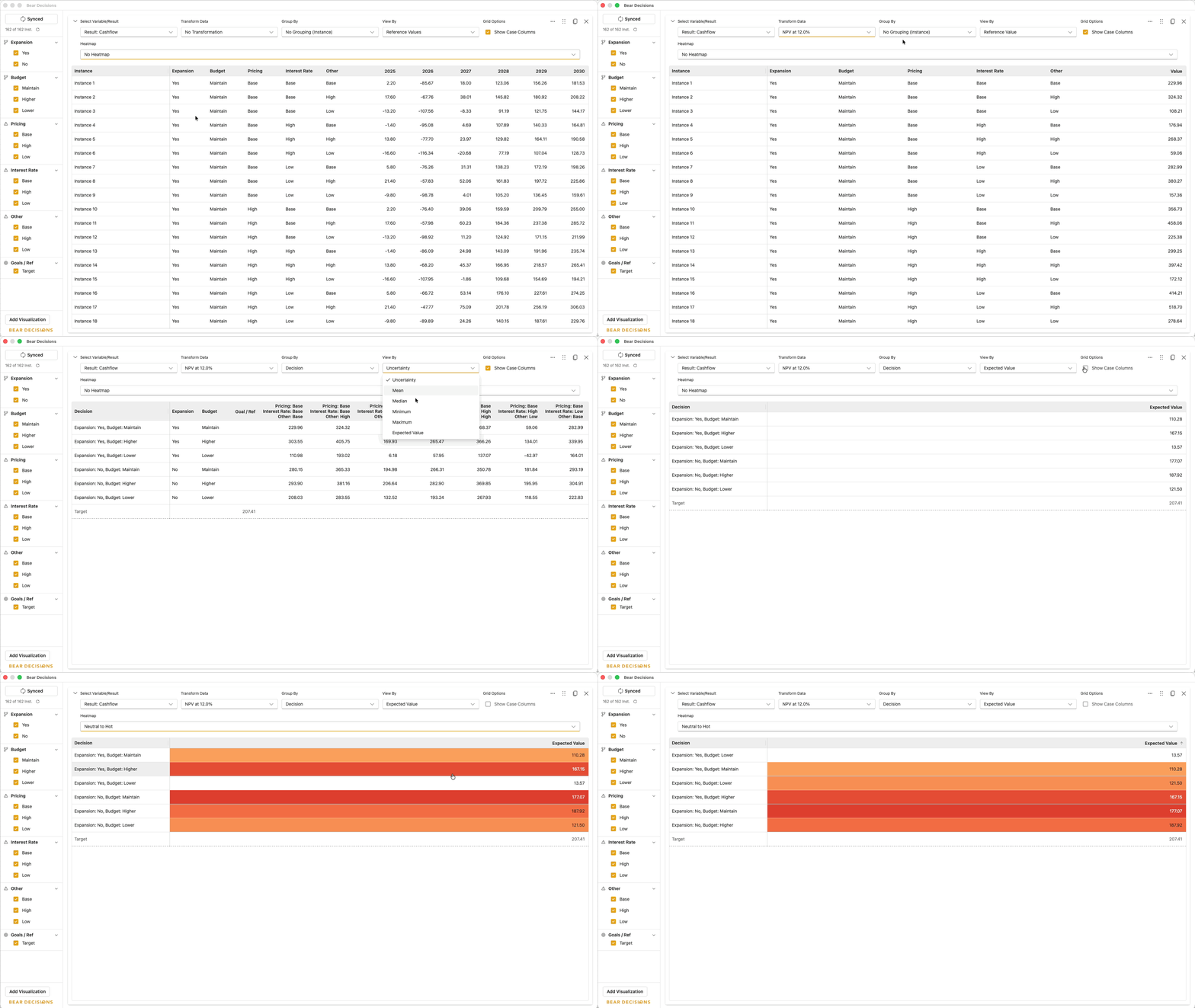
Tables are a great way to understand the full distribution of your results, helping you understand the full spectrum of possible outcomes - with precise numbers shown directly.
- Heatmapping: Color coding helps identify high and low values at a glance
- Show Case Columns: Choose whether to include extra columns including the Area's selected case name for each scenario
- Sorting: Click any column header to cycle through ascending, descending, or no sort
Simple Charts
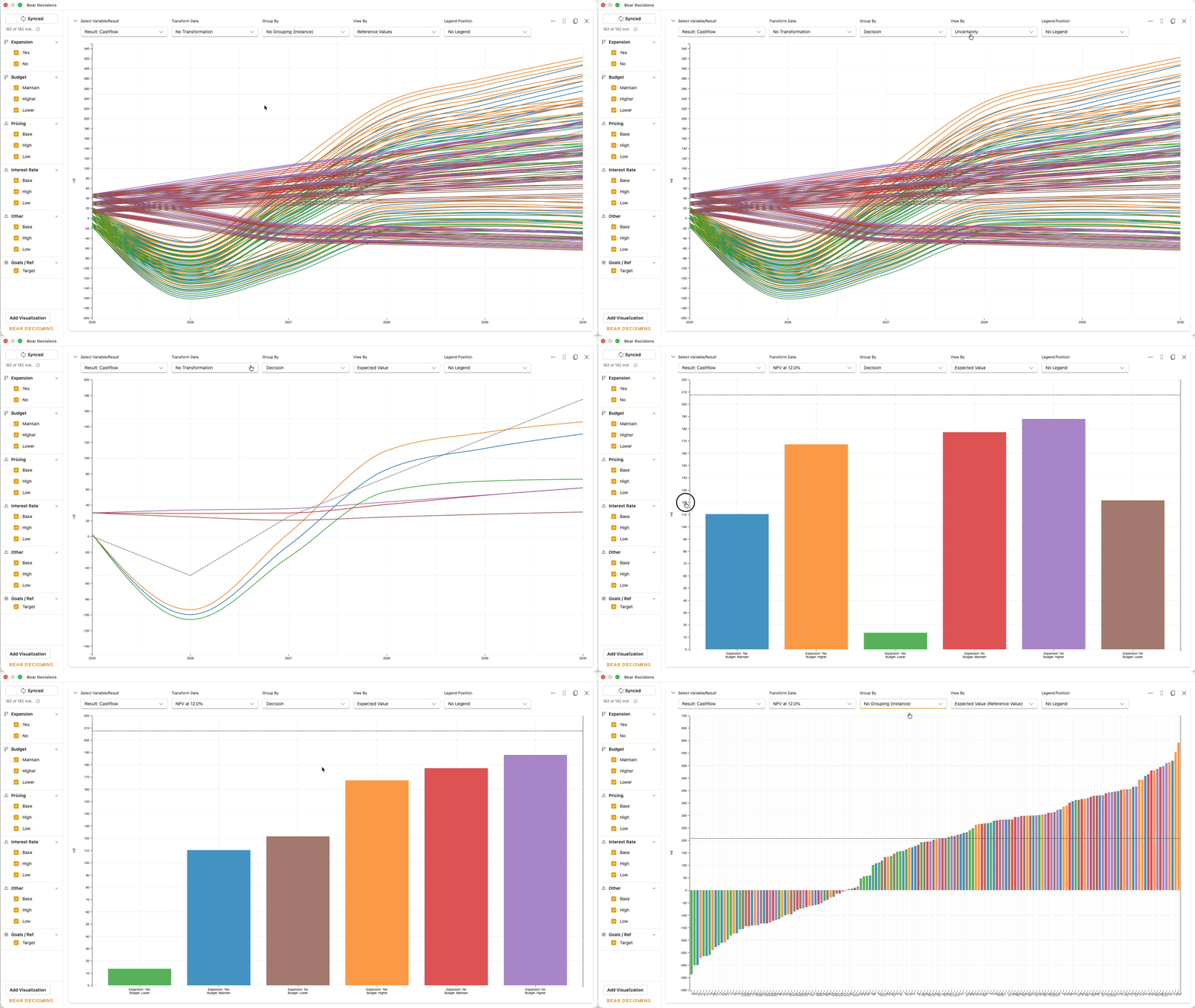
Simple charts are a great way to understand the central tendency of your results, helping you understand a single view of different decisions, uncertainties and scenarios.
- Bar Chart: For display of singleton values (single data points). Sortable by clicking on either the x or y axis
- Line Chart: For display of arrays (time series or multiple data points)
Range Charts
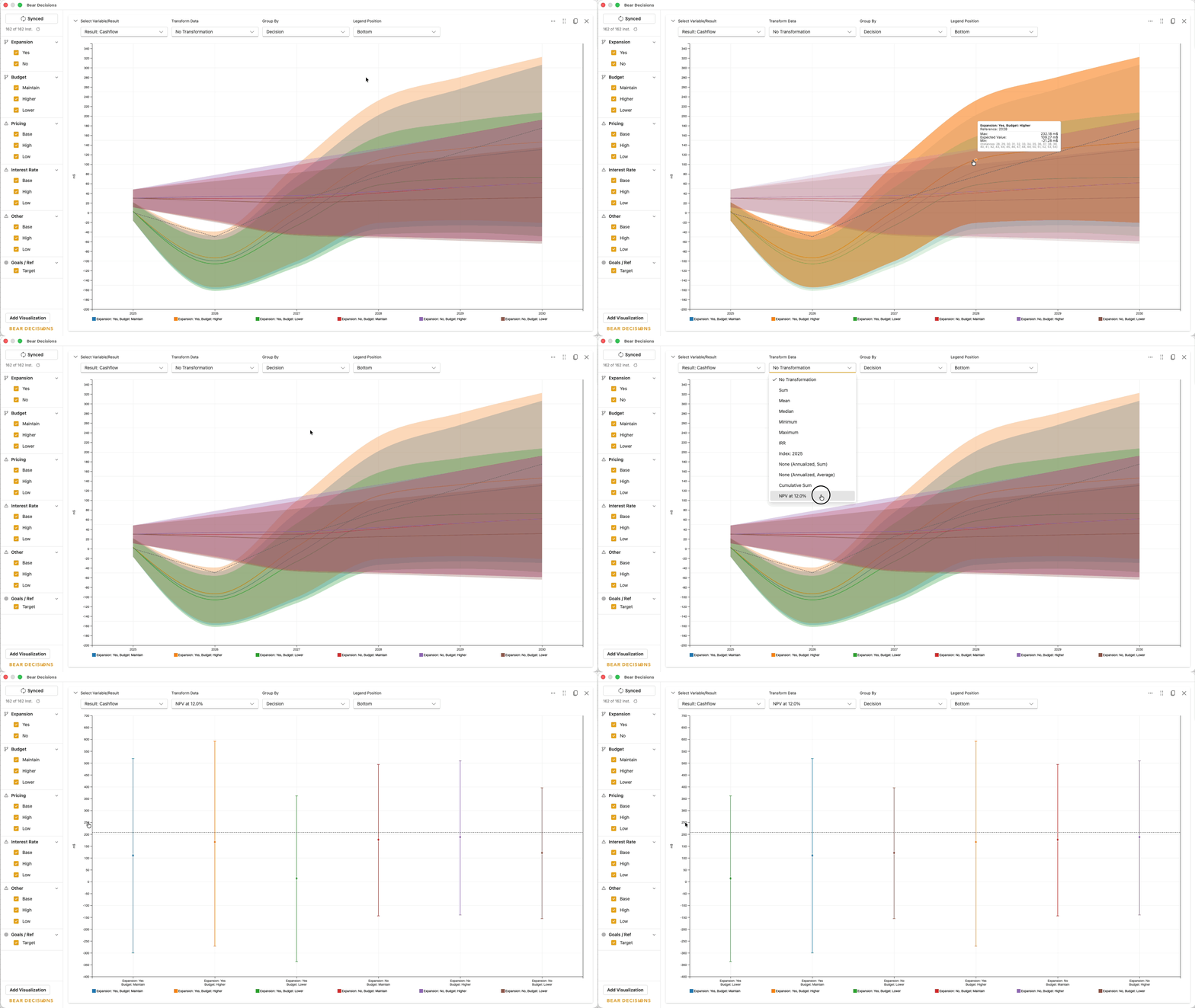
Range charts are a great way to understand the spread of possible outcomes, helping you understand both the upside potential and downside risk of different decisions.
- Simplified Box Plot Display: For display of singletons (top and bottom lines showing range of minimum and maximum values and a central value with a diamond). Sortable by clicking on either the x or y axis
- Area/Line Charts: For display of arrays showing the minimum and maximum range across time or categories with an area and a line showing the central value
Note: The central value is the Expected Value when grouped by Decision, and the Mean when grouped by Uncertainty
Note: Must be grouped by either Decision or Uncertainty (Chart not applicable to individual instances)
Cumulative Distribution Plot (CDP) Charts
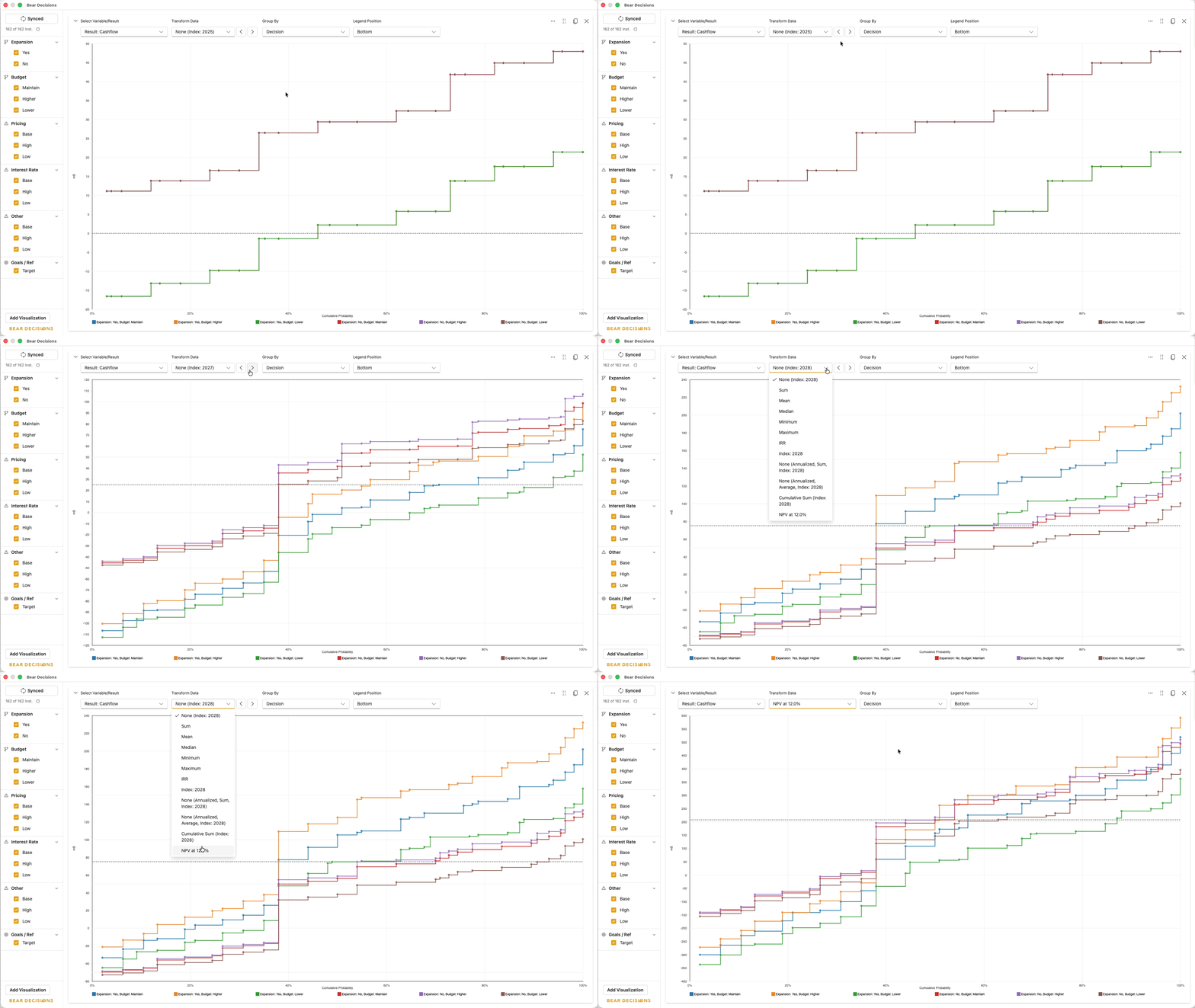
Restricted chart type that is automatically grouped by Decision with the cumulative probability distribution as a hardcoded view by option. Helps you understand the likelihood of achieving different outcome levels. Only applicable to singleton values (will automatically apply an index transformation to the data if it is not already a singleton).
- Sorting: Click the x-axis to flip the percentile display
CDP charts answer questions like "What's the probability of achieving at least $1M in profit?" or "What outcome can I expect with 90% confidence?" Use these to understand risk tolerance and set realistic expectations.
Tornado Charts
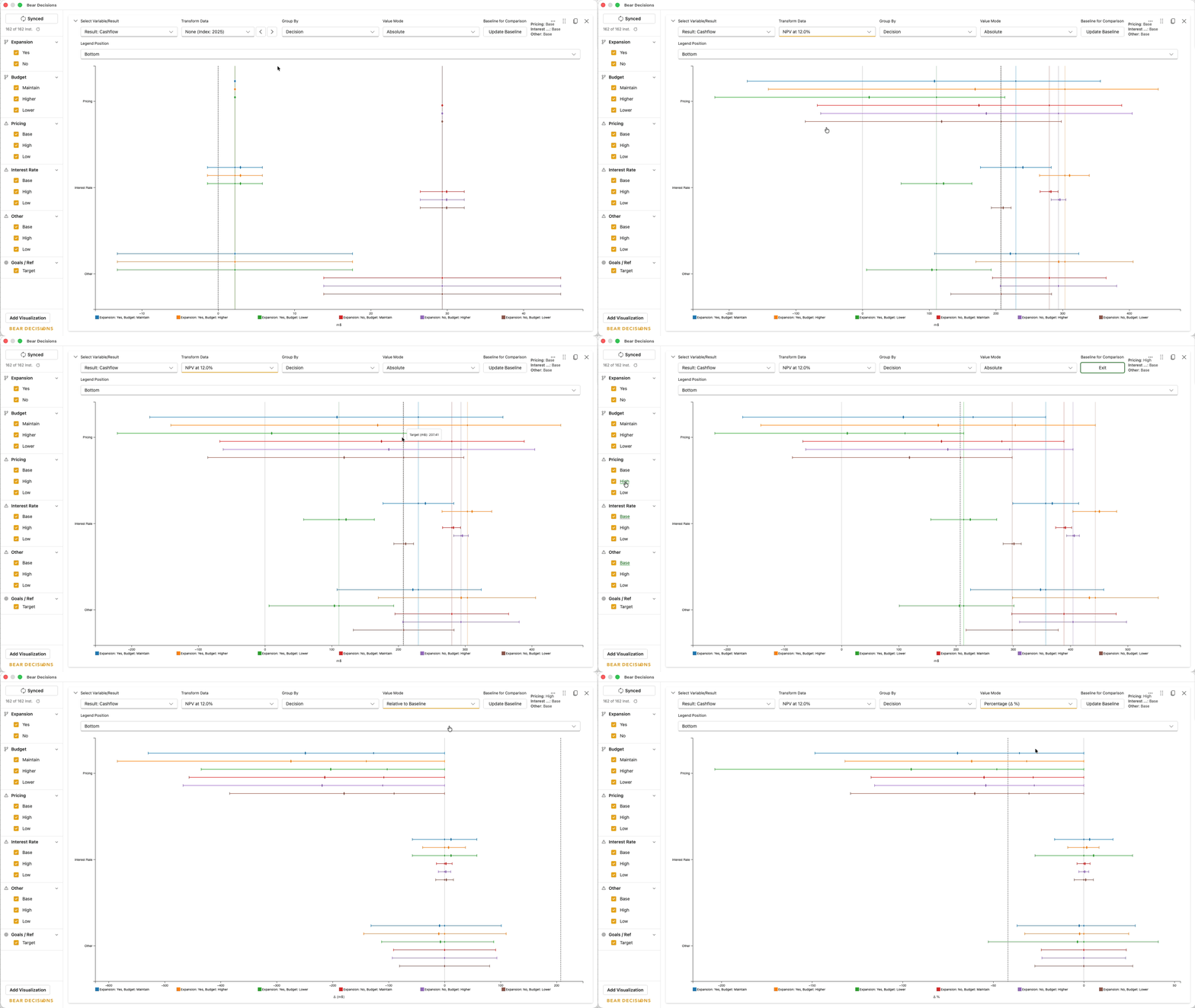
Tornado Charts are a great way to understand the range of possible outcomes associated with each specific area of uncertainty, controlling for the impact of other uncertainties relative to a defined baseline case. These charts are automatically grouped by Decision. Only applicable to singleton values (will automatically apply an index transformation to the data if it is not already a singleton)
- Value Mode: Choose whether to show the absolute value of the outcome, a relative value compared to the defined baseline case, or a percentage change from the baseline case.
Note: When the baseline case's result is 0 and the percentage change is selected, any deltas displayed will be proportional to a cap, where the cap is the next base 10 increment of the largest percentage delta that is displayed (e.g. if the largest percentage delta is 90% for a different decision/case, the cap will be 100%). - Update Baseline: Easily update what your reference point is by clicking into the Analysis Tree while in the update mode.
Note that updates are specific to the current Tornado Chart only, and that the mode will exit if changes outside of the Analysis Tree are made. Additionally, if during the general navigation/investigation of the dashboard, the analysis tree is modified so that the baseline case is not selected, then the first available case will be selected as the baseline case for that specific uncertainty area. - Expected Value: Beyond the minimum, maximum and baseline values, the Tornado Chart will also show the Expected Value of the outcome, which is the probability-weighted average of the outcome across all outcomes for the controlled uncertainty area. This will help you rapidly understand the relative skew of the distribution
Waterfall Charts
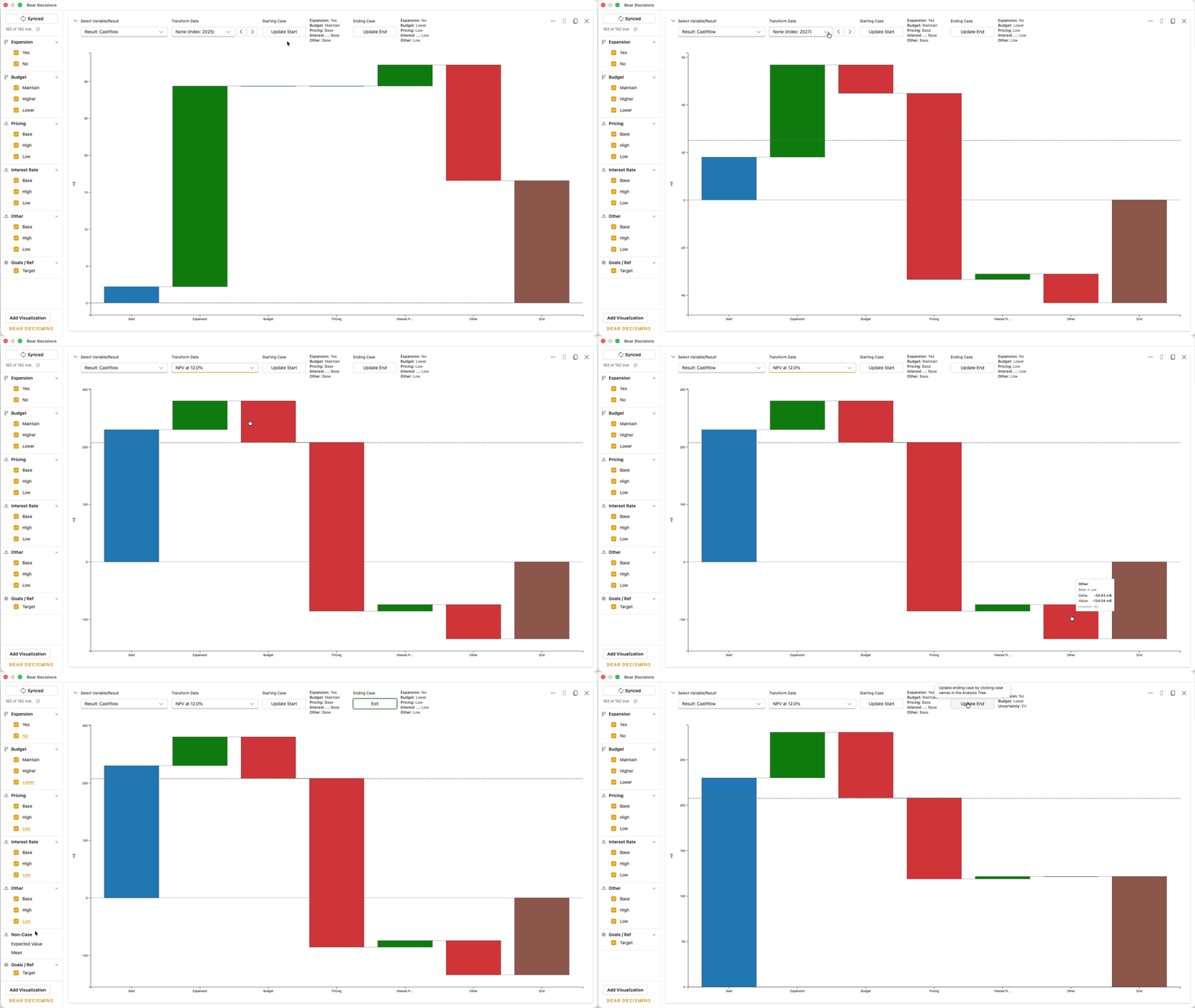
Waterfall Charts are a great way to understand how you get from one set of decisions or uncertainties to another. Similar to the Tornado Chart, you select initial and final sets of decisions and uncertainties and it shows the progressive change in the outcome per area. It also supports showing an Expected Value or Mean of the uncertainties - helping you decipher the impact of specific outcomes from these aggregated results. Only applicable to singleton values (will automatically apply an index transformation to the data if it is not already a singleton)
- Update Start/End: Easily update what your reference point is by clicking into the Analysis Tree while in the update mode.
Note that updates are specific to the current Waterfall Chart only, and that the mode will exit if changes outside of the Analysis Tree are made. Additionally, if during the general navigation/investigation of the dashboard, the analysis tree is modified so that the baseline case is not selected, then the first available case will be selected as the starting case for that specific area, while the last available case will be selected as the ending case (as applicable). - Expected Value/Mean/P50: As well as being able to select specific outcome instances, the Waterfall Chart is able to provide the expected value or mean aggregated uncertainty outcomes as well as the 50th percentile (median) of the uncertainty outcomes. Where there are multiple uncertainty areas, this acts as a progressive narrowing or expanding of the included instances depending on if the start or end is selected. This will help you rapidly understand how much the EV is shaped by each of the uncertainty areas outcomes independently
Decision Trees
Decision Trees are a great way to understand the full path of a specific scenario outcome back to the expected values of associated decisions and incremental uncertainty areas. They are automatically grouped by Decision and show the full path of the scenario through the analysis tree. Only applicable to singleton values (will automatically apply an index transformation to the data if it is not already a singleton).
- Decisions: Options exist to show all decisions simultaneously or to select a specific decision to show the full path of the uncertainty areas through the analysis tree.
- Collapse/Expand: As well as being able to filter out selected cases (and their descendents) from the analysis tree on the left, there is also the option to collapse (and re-expand) a branch of the tree by clicking on the symbol (the square, circle or triangle). The numbers in this case stay the same, considering the contributing instances, but are hidden to help create focus on the remaining items.
Note: Due to the large likely number of iterations and hence decision paths, the Decision Tree has elements on the top, bottom and left hand side of the visualization to flag the source of the tree path e.g. If the 'Expansion' decision branch is beneath the visible area, it will show the case name at the bottom of the visualization.
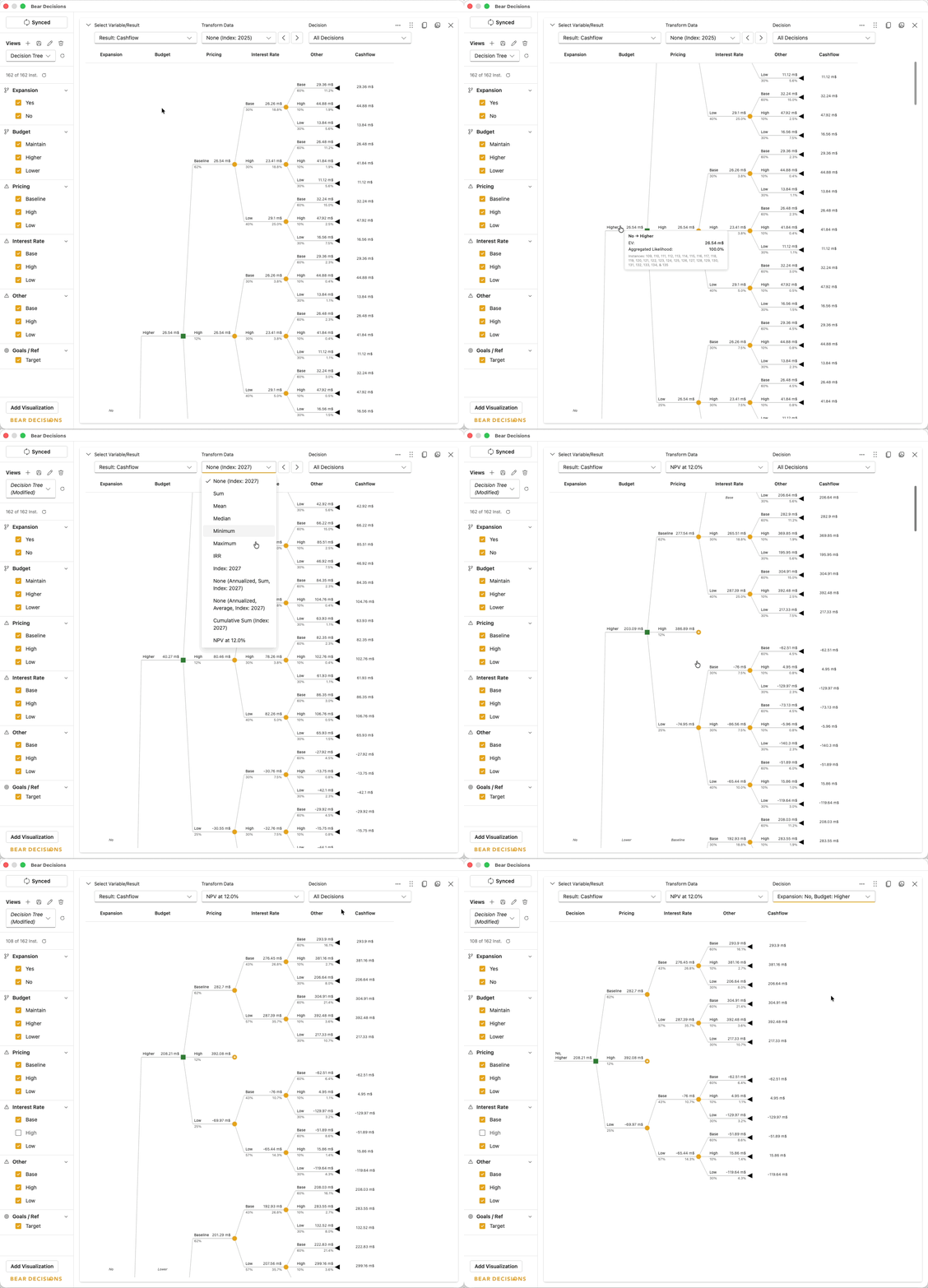
The Decision Tree exists both within the Analysis tab and the Probabilities tab. On the Analysis tab it is solely for reporting and seeing in context with the other results. On the Probabilities tab it can be used to quickly test changes to the likelihoods of a specific uncertainty area to identify if there is a directional change in the decision without having to go through the full analysis process.
Analysis Configuration Options
Each of the visualizations can be configured to show any of the Tracked Results and Input Variables with the following options. The Table and Simple Chart visualizations also have the ability to show the Likelihood of each case occurring.
Grouping Options
- Instance: No grouping - see individual scenario results
- Decision: Group results by your decision choices
- Uncertainty: Group results by uncertainty outcomes
- Decision (by 'Uncertainty Area'): Group results by decisions, with groups split by the specified Uncertainty Area - allowing you to rapidly understand the impact of different decisions under different uncertainty scenarios
- Uncertainty (by 'Decision Area'): Group results by uncertainty outcomes, with groups split by the specified Decision Area - allowing you to rapidly understand the impact of different uncertainty scenarios under different decisions
Transformations
Apply mathematical transformations to your results, transforming arrays into singletons:
- Sum: Total values across the selected dimension
- Mean: Average values
- Median: Middle value when sorted
- Minimum/Maximum: Extreme values
- IRR: Internal Rate of Return (defaults to 0 if no valid result)
- NPV: Net Present Value (defaults to 10% discount rate, configurable in Settings)
- Index: Select a specific point from a time series
View By Options
Primarily associated with managing aggregation of results or inputs when grouped.
- Mean, Median, Minimum, Maximum: Statistical measures of your results
- Expected Value: Probability-weighted average across uncertainty scenarios
- Reference Values: No transformation applied. Note that where it is grouped, then will show the opposite grouping dimension e.g. if grouped by Decision, view by Uncertainty
⚠️ Critical Distinction: Expected Value vs Mean
Expected Value is the probability-weighted average across your uncertainty scenarios, incorporating the likelihoods you assigned to different cases.
Mean is the simple arithmetic average across all scenarios, treating each as equally likely.
Expected Value reflects your best estimate of what will actually happen; Mean shows what would happen if all scenarios were equally probable.
Interactive Analysis Features
Filtering and Focus
Use the left-hand analysis treeindex to exclude specific cases from your calculations:
- Filter in and out problematic scenarios to test robustness or identify where additional mitigations are required
- Focus on specific uncertainty ranges to understand sensitivity
- Create clean narratives by removing edge cases
Selected Instance Drawer
Rapidly update your Excel model with a specific instance/outcome.
To achieve this, click on any interesting point in your visualizations to open the Selected Instance Drawer with the context of the selected point:
- Detailed View: See all instances associated with your selected point
- Case Selections: Understand which specific decisions and uncertainty cases created the result
- Update Excel: Update your Excel model with a specific scenario's inputs
- Restore Original: Return to original initial value inputs or a previously saved configuration
- Clear: Remove all instances from the drawer and close it
Note that may also collapse the drawer by clicking on the selected instance at the top of the drawer.
💡 Managing Your Excel Model's State
If you find yourself in a position where your base values in Excel are not what you expect following going through a process of updating to see a specific selected instance or if you had manually modified the base values in Excel, you can use the following options to restore your original state from the bottom of the Inputs Screen
- Restore: Return to your your most recent baseline inputs
- Update: Update the baseline inputs for use for Restoring Original to your current models inputs
Note that if you have previously updated the location of an input by selecting a different set of input cells, then clicking on the restore button next to a location within the Inputs screen, this will update the baseline values to the most recent inputs for that location.
Copy to Clipboard
Use the Copy to Clipboard button to copy the results of your analysis to the clipboard. This can be useful for sharing with others or for further analysis in other tools.
Export as PNG
Use the Export as PNG button to copy an image of the chart to the tab "BD_Images". This can be useful for sharing with others, for use in presentations or reports.
Common Interpretation Mistakes
Confusing Expected Value with Certainty
Expected Value represents your best estimate, but actual results will likely differ. Don't treat it as a prediction—use it as a baseline for comparison and planning.
Ignoring the Full Distribution
Looking only at Expected Value or Mean misses critical insights. Use Range Charts, Tornado Charts, and CDP Charts to understand the full spectrum of possibilities and if there is a specific bias in the results. A decision with a slightly lower Expected Value might be preferable if it has much less downside risk.
Over-Relying on Single Metrics
Different transformations (NPV, IRR, Sum) can lead to different conclusions. Use multiple perspectives to build confidence in your interpretation.
Forgetting Your Assumptions
Your analysis is only as good as your input assumptions and probability assignments. Regularly question whether your scenarios and likelihoods still make sense.
Process, not just a Result
Going through the analysis will identify where additional work may be needed to improve the plan or decision - mitigating key risks with new decision cases or even additional incremental decisions. Iterating on the results is important and expected.
Building Narratives and Making Decisions
Identifying Key Drivers
Use different grouping options to understand what matters most:
- Group by Decision: Which choices have the biggest impact on outcomes? Do you need to make all of these decisions now or can you defer some?
- Group by Uncertainty: Which external factors create the most risk? What is the relative importance of each uncertainty area/case for mitigation?
- Filter scenarios: How robust are your conclusions when you remove extreme cases?
Risk Assessment and Mitigation
Look for patterns that suggest additional work is needed:
- High-Impact Uncertainties: Which external factors, if they go wrong, could derail your strategy?
- Adjust Probabilities: How likely does a specific uncertainty area/case need to be for it to critical to the decision and directionally change the choice?
- Decision Sensitivity: Are some decisions only good under specific conditions?
- Edge Cases: What scenarios would require completely different strategies?
Strategic Insights
Bear Decisions helps you identify strategic insights that pure intuition might miss:
- Illogical Combinations: Some decision combinations may not make strategic sense together
- Conditional Strategies: Certain decisions may only be optimal under specific uncertainty conditions
- Risk-Return Tradeoffs: Understand when higher expected returns come with disproportionate risk
Communicating Results
Creating Compelling Narratives
Transform your analysis into actionable recommendations:
- Lead with Insights: Start with what decisions matter most, not technical details
- Show Ranges: Use Range Charts and Tornado Charts to communicate both opportunity and risk
- Address Key Concerns: Use filtering to show how conclusions change under different assumptions
- Recommend Actions: Identify which decisions to make, which risks to mitigate, and what to monitor
Stakeholder Communication
Different audiences need different perspectives:
- Executives: Focus on Expected Values, key risks, and strategic implications
- Risk Managers: Emphasize Range Charts, worst-case scenarios, and mitigation strategies
- Operational Teams: Show specific scenarios they might encounter and appropriate responses
Making Confident Decisions
Perfect information is impossible. You have enough to decide when:
- One decision clearly dominates across most reasonable scenarios
- You understand the key risks and have mitigation strategies
- Additional analysis wouldn't change your fundamental conclusion
- The cost of delay exceeds the value of additional information
✅ Decision Checklist
- Which decision has the best Expected Value under realistic scenarios?
- How much downside risk am I comfortable with?
- What external factors could change my conclusion, and can I monitor them?
- What would I need to believe for a different decision to be optimal?
- What's my backup plan if key assumptions prove wrong?
Next Steps
Now that you can interpret your results and build compelling narratives, you're ready to explore the settings and configuration options for Bear Decisions.